Maine Coon Kitten: Cost, Identification, Care and Buying Guide
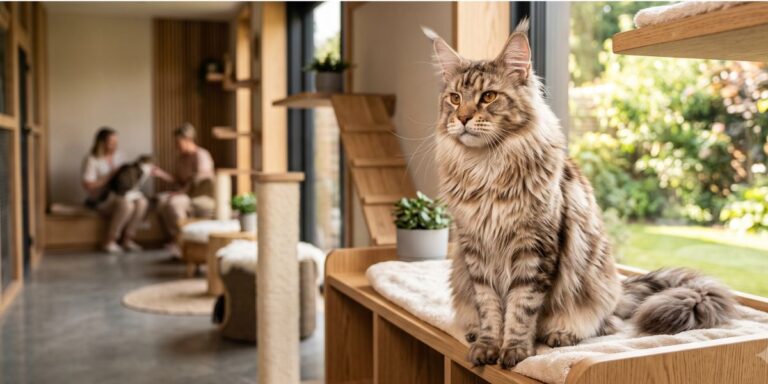
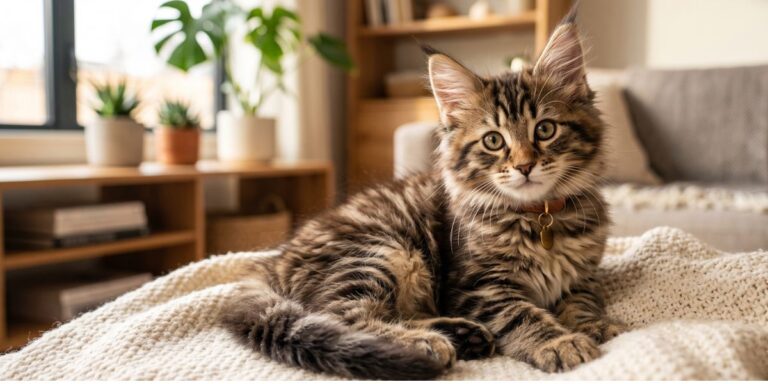
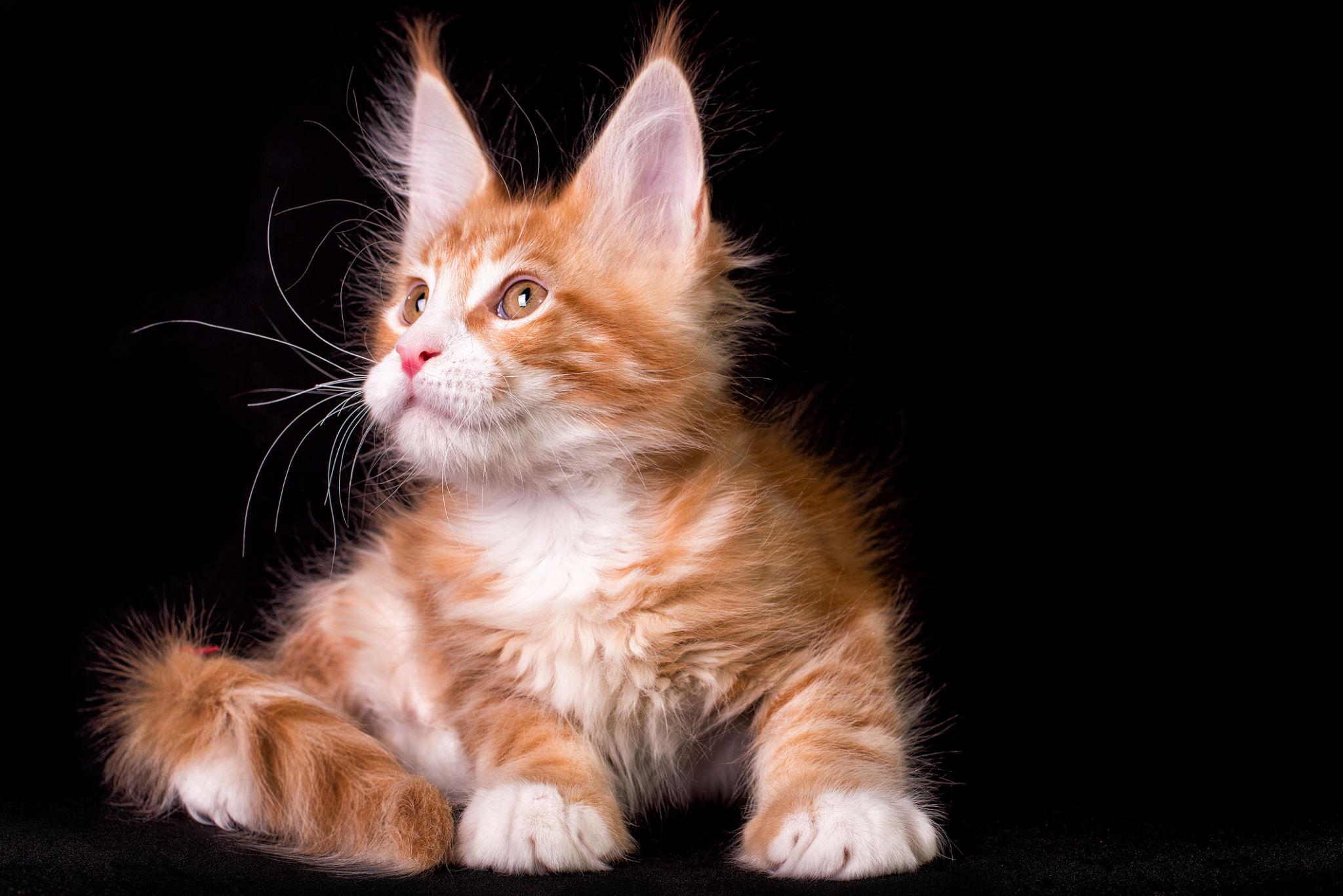
A Maine Coon kitten is easy to admire. These kittens have large paws, expressive eyes, tufted ears and a long, fluffy tail. They are also known for being friendly, intelligent and involved in family life. Their unusual size and gentle nature have helped make the Maine Coon one of the most popular pedigreed cat breeds.
However, buying one requires more than choosing the cutest kitten in a photograph. Prospective owners must understand the breed’s appearance, personality, health risks and long-term care needs. They must also learn how to separate a responsible breeder from an unreliable seller.
This guide explains what a Maine Coon kitten is, how to identify one and how much a Maine Coon kitten costs. It also covers health testing, breeder selection, home preparation and ongoing ownership expenses.
Prices in this guide are shown in US dollars as general estimates. Actual prices vary by country, region, breeder and individual kitten.
What Is a Maine Coon Kitten?
A Maine Coon kitten is a young cat belonging to the Maine Coon breed. The Maine Coon is a large, naturally developed longhaired breed associated with the US state of Maine and the wider New England region.
Its exact ancestry is not fully documented. Several legends surround the breed, but the most likely explanation is that local shorthaired cats bred with longhaired cats brought to North America by settlers and sailors. Over time, natural selection favored cats with strong bodies, large paws and thick coats that could cope with cold winters.
The International Cat Association describes the Maine Coon as America’s native longhaired cat. The breed developed as a hardy working cat with a broad chest, substantial bone structure, large feet and a long rectangular body.
Maine Coons are commonly called “gentle giants.” The name reflects the contrast between their impressive size and their calm, sociable personality. Many enjoy following their owners from room to room. They often want to take part in household activities without demanding constant physical attention.
The Cat Fanciers’ Association describes Maine Coons as sociable, loyal and intelligent. They often interact with several family members rather than attaching themselves to only one person.
A Maine Coon kitten may look larger and more heavily built than an average domestic kitten of the same age. However, size alone does not prove breed identity. Some domestic longhair kittens have similar coats, tails and ear tufts.
A verified pedigree from a recognized registry is the most reliable way to confirm that a kitten is a purebred Maine Coon.
How to Identify a Maine Coon Kitten
People often ask how to identify a Maine Coon kitten from its appearance. Several physical and behavioral traits can provide useful clues. Still, no single feature can confirm the breed.
A genuine Maine Coon should show a balanced combination of body shape, head structure, coat texture and temperament.
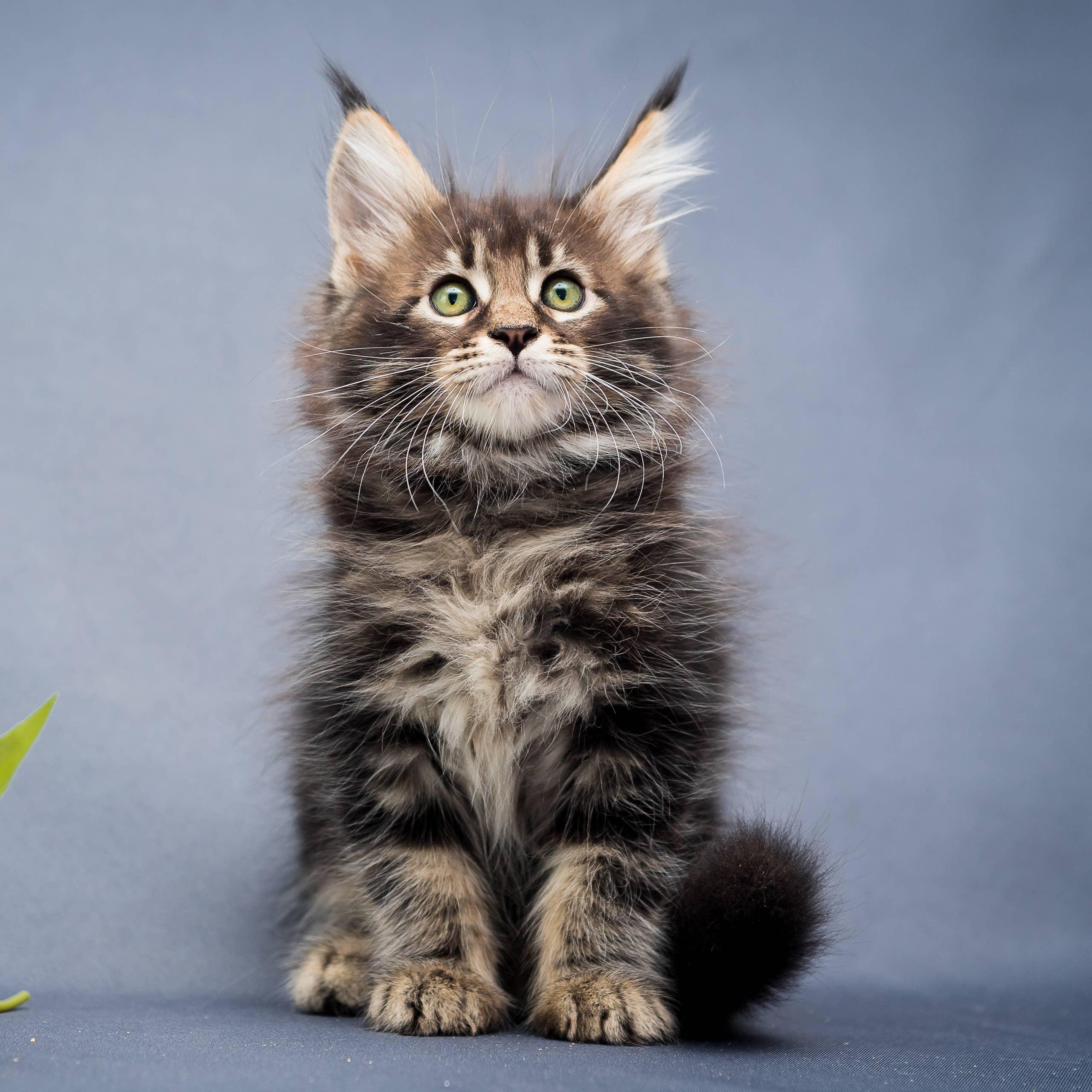
Large Body and Strong Bone Structure
Maine Coons have long, substantial bodies. Their shape is often described as rectangular rather than short or compact.
A typical kitten may have:
- A long torso
- A broad chest
- Strong, sturdy legs
- A solid bone structure
- Large, rounded paws
- Fur between the toes
Their paws can look oversized while they are young. This does not guarantee that the kitten will become exceptionally large, but it fits the breed’s natural structure.
Some Maine Coons are polydactyl, which means they have extra toes. However, this trait is not present in every Maine Coon. A kitten does not need extra toes to be purebred, and having extra toes does not automatically make a kitten a Maine Coon. TICA recognizes polydactyl Maine Coons as a related breed group.
Distinctive Ears and Facial Features
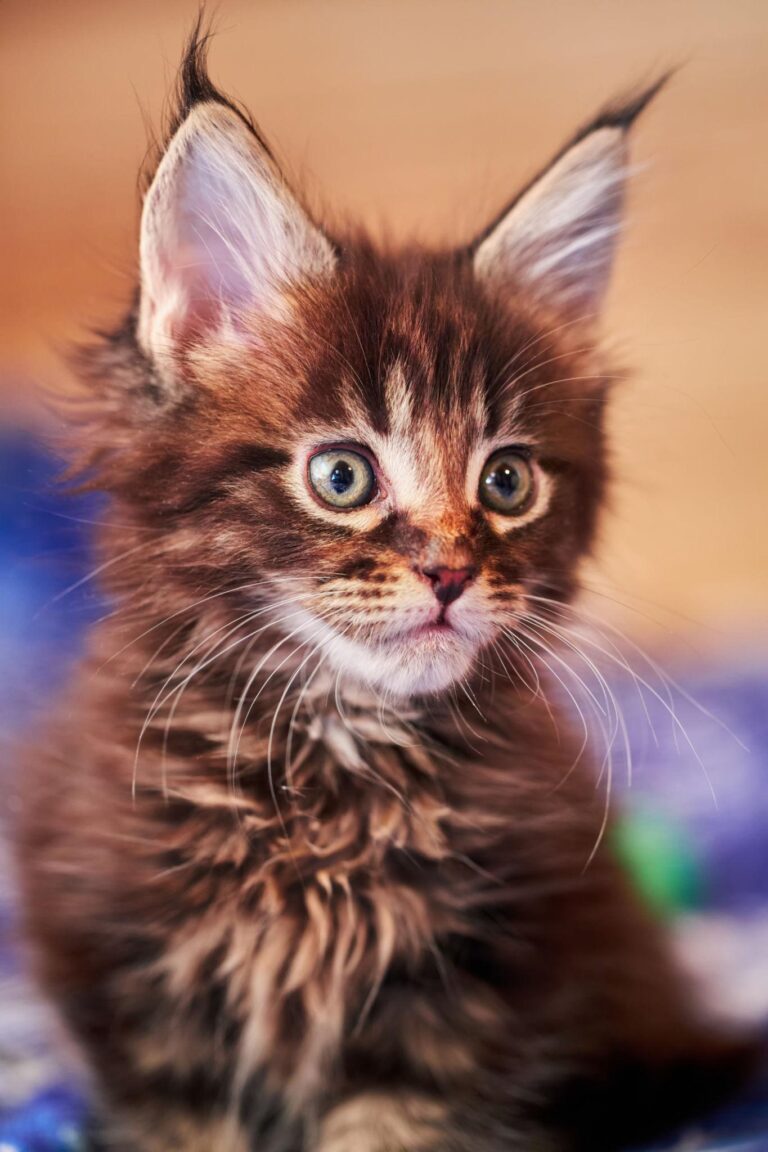
The ears are one of the breed’s most noticeable features. They are usually large, wide at the base and pointed at the top. Many have tufts of hair at the tips, sometimes called lynx tips.
However, ear tufts vary. Some purebred kittens have dramatic tufts, while others have more modest ones.
The face may include:
- High or noticeable cheekbones
- A medium-length nose
- A firm chin
- A strong, square muzzle
- Large, expressive eyes
The square muzzle is especially important. It gives the face a more structured appearance than the narrow or rounded muzzle seen in many domestic cats.
Young kittens may not show their final facial structure. Their head, cheeks and muzzle continue to develop as they grow.
Long, Shaggy Coat
A Maine Coon has a semi-long coat with an uneven length. The fur is normally shorter across the shoulders and longer around the stomach, back legs and tail.
Adult cats often develop a noticeable neck ruff. However, this may not be fully visible in a young kitten.
The coat may feel silky, dense or slightly shaggy. Some coat types require more grooming than others. TICA notes that young kittens often have thinner and shorter coats than mature Maine Coons, so buyers should not expect a small kitten to have a fully developed adult coat.
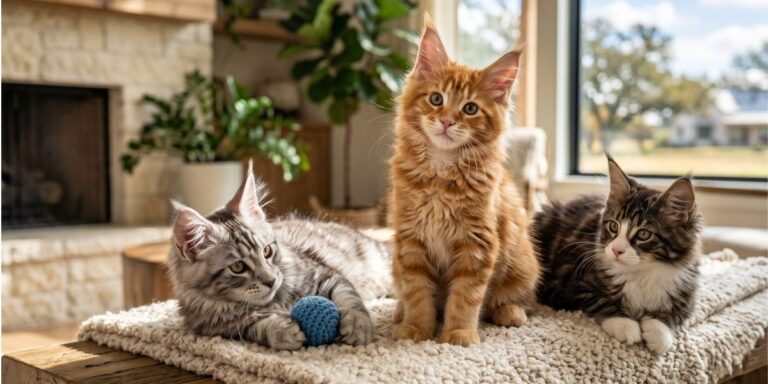
Maine Coons appear in many colors and patterns, including:
- Brown tabby
- Silver tabby
- Red or orange tabby
- Blue or gray
- Black
- White
- Cream
- Tortoiseshell
- Smoke
- Solid colors
- Colors with white markings
Color is not a reliable sign of purity. Brown tabby may be strongly associated with the breed, but Maine Coons are not limited to that pattern.
Long and Bushy Tail
The tail is usually long, wide at the base and heavily covered with fur. It may look like a plume.
When extended, the tail can appear close to the length of the kitten’s body. The dense fur helped the breed’s ancestors cope with cold weather.
A fluffy tail alone does not confirm the breed. Norwegian Forest Cats, Siberians and domestic longhair cats may also have long, bushy tails.
Behavior and Personality
Maine Coon kittens are often curious, playful and socially confident. Many enjoy interactive toys, puzzle feeders and games that involve their owners.
Common personality traits include:
- Friendly behavior
- Interest in people
- Gentle play
- High intelligence
- Moderate vocalization
- Curiosity about water
- Good tolerance of other pets
Some Maine Coons make chirping or trilling sounds instead of frequent, loud meows. Many learn routines quickly and may retrieve toys or respond to simple commands.
Temperament varies between individuals. Early socialization also matters. A poorly socialized kitten may be fearful even when it comes from a normally friendly breed.
Physical appearance and personality can suggest Maine Coon ancestry. Only registration records and a documented pedigree can confirm that a kitten is purebred.
How Much Does a Maine Coon Kitten Cost?
How much does a Maine Coon kitten cost? In the United States, a pet-quality kitten from a responsible breeder commonly costs between approximately $1,000 and $2,500. Some established breeders charge more, especially when their price includes extensive health testing, registration, vaccinations and long-term support.
Show-quality kittens, unusual bloodlines and kittens sold with breeding rights may cost between approximately $2,500 and $6,500 or more. Current published price guides show wide differences between breeders, which is why buyers should compare what each price actually includes.
These ranges are estimates, not fixed market prices. A kitten may cost more in an area with few registered breeders. International transportation can also add a large amount to the final cost.
“Pet quality” does not mean unhealthy or inferior. It normally means that the kitten has a small feature that may not closely match the show standard or that it is sold without breeding rights. Pet-quality kittens should receive the same responsible health care as show kittens.
A very low price should raise questions. A seller offering a supposedly purebred kitten for a small fraction of the usual price may be hiding poor breeding practices, missing health tests or a scam.
Factors That Affect Maine Coon Kitten Prices
Several factors determine the amount a breeder charges. Buyers should examine the complete package rather than focusing only on the advertised price.
Breeder Reputation
An experienced breeder may charge more because responsible breeding is expensive. Ethical breeders pay for veterinary care, genetic testing, high-quality food, registration, safe housing and proper socialization.
A recognized registration is useful, but registration alone does not prove that every breeder is responsible. Buyers should still review the breeder’s practices, contracts and health records.
Pedigree and Bloodline
Kittens from established show lines may carry a higher price. Breeders may also charge more when the parents have achieved titles at recognized cat shows.
A pedigree should list the kitten’s registered ancestors. It helps confirm breed identity and allows breeders to track health, genetic diversity and family lines.
A high price or champion pedigree does not guarantee perfect health. Health testing remains essential.
Age, Color and Gender
Some breeders charge different prices for particular colors, coat patterns or sexes. Rare-looking colors may attract more interest, although color does not make a kitten healthier or more suitable as a pet.
Kittens intended for breeding usually cost more than kittens sold as companions. The higher price may include breeding rights and active registration.
Buyers should not choose a kitten based only on color. Temperament, health, socialization and compatibility with the household are more important.
Health Testing and Veterinary Care
A responsible breeder’s fee may include:
- Veterinary examinations
- Core vaccinations
- Deworming
- Microchipping
- Registration
- Genetic screening
- A health certificate
- Spaying or neutering
- A written health guarantee
TICA advises buyers to request veterinary reports, vaccination records and proof of breed-specific health screening before completing a pedigree-kitten purchase.
Ask the breeder to explain each test. A vague statement such as “all cats are health tested” is not enough. Buyers should be able to see dated results that identify the tested cat.
Location and Transportation
Prices vary between cities, states and countries. A kitten from a distant breeder may also require:
- An airline-approved carrier
- A flight nanny
- Ground transportation
- A veterinary travel certificate
- Import permits
- Customs charges
- Additional vaccinations
Whenever possible, collect the kitten personally. Meeting the breeder and seeing the environment can reduce risk.
How Much for a Maine Coon Kitten? Additional Ownership Costs
When people ask how much for a Maine Coon kitten, they often focus only on the purchase price. However, the first payment is only one part of the total cost.
Maine Coons are larger than average cats. They may eat more food and need larger equipment.
Food and Nutrition
Choose complete, balanced food designed for the kitten’s age and development. Avoid trying to make the kitten grow faster through excessive feeding.
A Maine Coon is naturally large, but it should not be overweight. Extra body weight can increase stress on the joints and heart.
Food costs depend on brand, feeding method and veterinary needs. A kitten that develops a food sensitivity or medical condition may need a more expensive diet.
Veterinary Care
Budget for:
- Initial veterinary examination
- Vaccination boosters
- Parasite prevention
- Dental care
- Annual wellness checks
- Spaying or neutering when not already completed
- Unexpected illness or injury
Pet insurance may reduce the financial impact of emergencies. Read exclusions, waiting periods and hereditary-condition rules before selecting a policy.
Grooming and Equipment
A Maine Coon may need:
- A metal comb
- A slicker brush
- Nail clippers
- Dental-care products
- A large litter box
- Strong scratching posts
- A stable cat tree
- A large carrier
- Durable beds and toys
Cheap furniture may not support a full-grown Maine Coon. Buying strong, appropriately sized equipment from the beginning may save money later.
An emergency fund is also important. Even a well-bred, healthy kitten can become sick or injured.
Where to Buy a Maine Coon Kitten
The safest source depends on whether you want a documented purebred kitten, a rescue cat or a Maine Coon mix.
Registered Maine Coon Breeders
A registered breeder can provide pedigree documents and information about the kitten’s ancestry. Recognized organizations such as TICA, CFA and GCCF maintain breed information and breeder resources.
Registration should be treated as a starting point, not the final proof of quality. Visit the breeder, inspect the records and review the contract.
A responsible breeder usually asks buyers questions. They may want to know about your home, other pets, work schedule and experience with cats. This shows that they care where the kitten will live.
Maine Coon Rescue Organizations
Breed-specific rescues sometimes have Maine Coons, Maine Coon mixes or large domestic longhair cats available for adoption.
Purebred kittens are less common in rescue than adult cats. However, adopting an adult offers several advantages. Its full size, coat and personality are already easier to assess.
Adoption fees are generally lower than breeder prices and may include vaccinations, microchipping and spaying or neutering. Published estimates often place rescue fees at roughly $100 to $550, although each organization sets its own price.
Local Animal Shelters
Shelters may label a cat as a Maine Coon or Maine Coon mix based on appearance. This can be a useful description, but it does not prove pedigree.
Many large domestic longhair cats share similar traits. If registration is important to you, ask for documented records rather than relying on a visual label.
If companionship matters more than pedigree, a shelter cat may still be an excellent choice.
Online Maine Coon Listings
Online listings require special care. Scammers may copy photographs, create fake breeder websites and request repeated payments for transport, insurance or special crates.
Common warning signs include:
- Prices far below the normal range
- Pressure to pay immediately
- Refusal to arrange a live video call
- Stock photographs used on several websites
- No verifiable address
- Payment through cryptocurrency or gift cards
- Unexpected shipping charges
- Poorly written or inconsistent paperwork
- Many kittens always available
Do not send full payment based only on messages and photographs. TICA advises buyers to use recognized breeder sources, inspect documentation and avoid unusually cheap listings.
How to Choose a Reputable Maine Coon Breeder
A reputable breeder should be transparent before, during and after the sale.
Start by checking the breeder’s registration. Confirm the membership directly through the registry when possible. Do not rely only on a badge copied onto a website.
Next, ask to visit the breeding environment. When an in-person visit is not possible, request a live video tour. The video should show the kitten, its mother and the area where the cats live.
The space should be clean, safe and suitable for social development. Kittens should appear comfortable with normal household sounds and gentle human handling.
Ask to meet the kitten’s mother. Meeting the father may not always be possible because some breeders use an outside stud. However, the breeder should still provide his registered details and health records.
Before paying a deposit, request:
- The kitten’s date of birth
- Registry information
- A copy of the pedigree
- Vaccination records
- Deworming history
- Microchip information
- Veterinary examination records
- Parents’ health-test results
- Purchase contract
- Health guarantee
- Return or rehoming policy
- Spay or neuter terms
- Breeding-right restrictions
Read the contract carefully. It should identify the kitten and both parties. It should also explain what happens if a serious health condition appears.
A good breeder does not guarantee that a living animal will never become ill. Instead, the breeder explains what has been tested, what the guarantee covers and what evidence is required for a claim.
Kittens should not leave their mother too early. TICA states that many knowledgeable breeders place kittens at 12 weeks or older. GCCF recommends at least 13 weeks for pedigree kittens. This extra time supports weaning, vaccination and social development.
Be cautious when a seller offers immediate delivery of an eight-week-old pedigree kitten with little screening of the buyer.
A reputable breeder may have a waiting list. They may also refuse a sale when they believe the home is unsuitable. These practices can be signs of responsible placement.
Health Checks Before Buying a Maine Coon Kitten
No breeder can remove every health risk. However, responsible screening can reduce the chance of passing on known inherited conditions.
Ask for the results of the parents, not only a general statement about the kitten.
Hypertrophic Cardiomyopathy Screening
Hypertrophic cardiomyopathy, or HCM, causes the muscular walls of the heart to become abnormally thick. This can reduce the heart’s ability to pump blood effectively. Maine Coons are among the breeds with a recognized predisposition to HCM.
A DNA test can detect a known Maine Coon-associated mutation. However, a negative result does not prove that a cat can never develop HCM. The test only addresses the mutation included in that test.
The GCCF Maine Coon breeding policy advises that breeders should not claim their cats are completely “HCM-free” based only on a negative DNA result. It also describes periodic heart scanning as good practice for breeding cats because other causes may exist.
Ask whether the parents have had:
- DNA screening for the known mutation
- Cardiac examinations
- Echocardiograms performed at suitable ages
- Ongoing screening rather than a single early test
Hip Dysplasia Screening
Hip dysplasia affects the structure and fit of the hip joint. It may cause pain, stiffness or reduced movement.
Screening is normally carried out through properly positioned X-rays. The Orthopedic Foundation for Animals accepts cats into its hip dysplasia database.
Ask whether the parents have been evaluated and request copies of the results.
Spinal Muscular Atrophy Testing
Spinal muscular atrophy, or SMA, is an inherited condition found in Maine Coons. It affects motor neurons and can cause weakness, an unusual gait and reduced muscle mass in the hind legs.
Signs may first appear when a kitten is around three to four months old. A DNA test is available to identify affected cats and carriers.
Responsible breeding decisions can prevent two carriers from producing affected kittens.
Pyruvate Kinase Deficiency
Pyruvate kinase deficiency, often shortened to PKDef, is an inherited condition that affects red blood cells and may cause anemia.
Some Maine Coon breeding programs include PKDef in their DNA screening panels. Ask whether it was tested and what the results mean.
Do not confuse PKDef with polycystic kidney disease. Both may be shortened in casual conversation, but they are different conditions.
Polycystic Kidney Disease
Polycystic kidney disease is more strongly associated with Persian-related breeds. It is not normally the first health condition linked with Maine Coons.
However, a breeder may test for it when a particular bloodline or breeding history creates concern. Screening should be based on veterinary guidance and the cats involved.
General Veterinary Health
Before collection, the kitten should appear:
- Alert and curious
- Steady when walking
- Clean around the eyes and nose
- Free from persistent coughing or sneezing
- Free from severe diarrhea
- Well covered but not overweight
- Comfortable with normal handling
Ask when the kitten was last examined by a veterinarian. Arrange your own veterinary appointment soon after bringing it home.
Health information in this guide is educational. Diagnosis, treatment and screening decisions should come from a qualified veterinarian.
Preparing Your Home for a Maine Coon Kitten
Prepare the home before collection day. A calm setup can make the transition easier.
Start with one secure room. Place food, water, a litter box, a bed, toys and a scratching surface inside it. Let the kitten explore the rest of the home gradually.
Choose a large litter box with enough space for turning and digging. You may need to replace it as the kitten grows.
Select a stable cat tree with a wide base. Check its weight rating. Maine Coons are heavy and can make weak furniture tip over.
Protect the kitten by:
- Covering electrical cords
- Securing windows and balcony doors
- Removing toxic plants
- Storing cleaning products safely
- Blocking dangerous gaps
- Removing thread, ribbon and small objects
- Checking reclining furniture before use
Introduce grooming early. Use short, gentle sessions and reward calm behavior. Regular combing helps prevent knots around the stomach, chest, legs and underarms.
Introduce children and pets slowly. Do not force interaction. Give the kitten safe places where it can rest without being followed.
Is a Maine Coon Kitten Right for You?
A Maine Coon may suit a family that wants a social, playful and intelligent companion. Many live comfortably with respectful children, cats and cat-friendly dogs.
However, the breed requires time, money and space.
Consider whether you can provide:
- Regular grooming
- Daily interaction
- Strong, large equipment
- Quality nutrition
- Routine veterinary care
- Emergency medical funds
- Safe indoor enrichment
- Long-term commitment
Maine Coons mature slowly. TICA notes that they may not reach full maturity until around four years of age. Adult males can also become considerably larger than an average domestic cat.
Do not choose the breed only because you want the largest possible cat. Ethical breeders focus on balanced structure and health rather than extreme size.
Frequently Asked Questions
How much is a Maine Coon kitten?
A Maine Coon kitten from a responsible US breeder often costs around $1,000 to $2,500. Show-quality kittens, rare lines or kittens with breeding rights may cost considerably more.
The final amount depends on location, breeder experience, pedigree, veterinary care, registration and included services. Always ask for a written explanation of what the price covers.
How much does a Maine Coon kitten cost from a registered breeder?
A registered breeder may charge between approximately $1,000 and $2,500 for a companion kitten. Some established breeders charge $3,000 or more.
Show or breeding kittens may cost between $2,500 and $6,500 or above. Registration alone should not determine your decision. Review the breeder’s health testing, socialization, contract and living conditions.
How much for a Maine Coon kitten from a rescue?
A Maine Coon or Maine Coon mix from a rescue may have an adoption fee of roughly $100 to $550. Fees vary by location, age and medical care.
The fee may include vaccinations, microchipping, parasite treatment and spaying or neutering. Purebred Maine Coon kittens are uncommon in rescue, so buyers may need to consider an adult or mixed-breed cat.
How can you identify a Maine Coon kitten?
Look for a long rectangular body, large paws, substantial bone structure, tufted ears, a square muzzle, a shaggy coat and a long bushy tail.
Behavior may also provide clues. Many Maine Coons are sociable, playful and intelligent. However, these features are not proof of pedigree. Registration documents from a recognized registry provide stronger confirmation.
What is a Maine Coon kitten’s average size?
There is no single correct weight for every age. Growth depends on sex, genetics, nutrition and individual development.
Maine Coons grow more slowly than many other cats. They may continue developing for three to five years. A healthy kitten should follow a steady growth pattern rather than being pushed to gain weight quickly.
Your veterinarian can monitor body condition and growth during routine appointments.
At what age should a Maine Coon kitten leave its breeder?
Many responsible breeders place kittens at about 12 to 14 weeks of age. At this stage, they have had more time for weaning, litter training, vaccination and social learning with their mother and littermates.
A breeder offering a very young kitten should explain why. Early separation can interfere with behavioral and social development.
Are Maine Coon kittens expensive to maintain?
They can cost more to maintain than an average cat because they need larger equipment and may consume more food. Grooming, insurance, dental care and veterinary expenses also add to the budget.
The greatest financial risk is unexpected medical care. Pet insurance or a dedicated emergency fund can make ownership more manageable.
Are all Maine Coon kittens very large?
No. The breed is generally large, but size varies. Females are often smaller than males, and some healthy purebred Maine Coons remain within a moderate weight range.
Avoid breeders who promise an exact adult size or advertise extreme weight as the main selling point. Healthy proportions matter more than maximum size.
Do Maine Coon kittens get along with dogs?
Many Maine Coons live successfully with calm, cat-friendly dogs. Their sociable and confident nature can help, but the introduction process still matters.
Use scent exchange, physical barriers and supervised meetings. Never allow a dog to chase or corner the kitten.
How often should you groom a Maine Coon kitten?
Begin gentle grooming several times each week. Even when the kitten’s coat is still short, early practice helps it accept brushing as an adult.
Focus on areas that mat easily, including the stomach, chest, underarms and back legs. Never pull hard on a knot. Ask a professional groomer or veterinarian for help with severe matting.
Conclusion
A Maine Coon kitten can become a friendly, intelligent and deeply involved family companion. However, a successful purchase starts with careful research.
Learn the breed’s full range of features instead of relying on ear tufts or body size alone. Verify pedigree documents, inspect health-test results and choose a breeder who communicates openly.
Most importantly, plan beyond the purchase price. Food, grooming, strong equipment, veterinary care and emergency expenses continue throughout the cat’s life.
Whether you buy from a responsible breeder or adopt through a trusted rescue, choose health, temperament and ethical care before color, rarity or extreme size. That approach gives both you and your Maine Coon the best possible start.